Walthamstow Market
Challenges and Innovation in Street Food Hospitality
Walthamstow Market is one of the longest outdoor markets in Europe and a key part of London’s local visitor economy. It represents a dynamic hospitality environment where independent street food vendors operate within a highly competitive and culturally diverse urban setting (Walker, 2023). This project critically evaluates the challenges faced by street food vendors and analyses how service characteristics, mobility, and market pressures influence their performance and sustainability.
Module Title: Hospitality Management
Student Name: Muhammad Usman
Student ID: M01088224
Programme: BSc International Hospitality and Tourism Management
University: Middlesex University London
Module Leader: Dr Rui Su
Submission Date:
Academic Year: 2025–2026

MARKET CONTEXT

Walthamstow Market operates as one of London’s largest street markets, supporting a wide range of independent vendors and attracting diverse customer groups. Similar London markets contain dozens to hundreds of stalls offering international food and local produce .
However, these markets are highly competitive and often overcrowded, particularly during peak hours. Visitors frequently experience limited seating and long waiting times .
This indicates that vendors operate in saturated environments where maintaining service quality and customer satisfaction becomes increasingly difficult.
London street food markets can contain over 100 stalls operating in close proximity, creating intense competition and limiting product differentiation.
SERVICE CHARACTERISTICS:

Street food vendors operate within key hospitality service characteristics. Services are intangible, meaning customers cannot assess quality before purchase. As a result, visible factors such as cleanliness and staff behaviour strongly influence perceptions (Walker, 2023).
Services are also inseparable, meaning production and consumption occur simultaneously. This makes service delivery highly dependent on employee performance. In addition, heterogeneity means service quality varies between employees, while perishability results in financial loss from unsold food.
These characteristics make service management complex, as vendors must deliver consistent quality while dealing with unpredictable demand and human variability.
CHALLENGES:

Street food vendors face multiple operational challenges. Labour instability leads to inconsistent service delivery, while rising costs reduce profit margins.
In addition, real-world evidence shows that London markets experience overcrowding and long queues, particularly during peak periods .
This suggests that vendors operate under both internal pressures (labour, cost) and external pressures (competition, customer expectations), increasing operational complexity.
Failure to manage these pressures can reduce customer satisfaction and long-term business sustainability.
LABOUR CHALLENGE
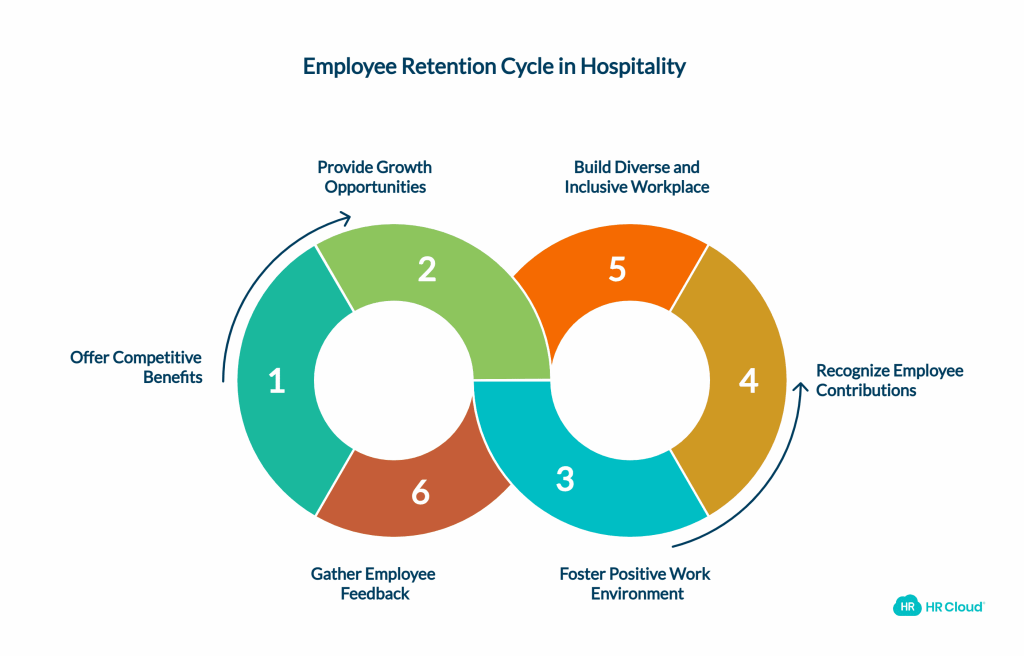
Labour instability is a major challenge in street food operations. Vendors often rely on part-time or migrant workers, resulting in high staff turnover and inconsistent service quality (King et al., 2021).
This indicates that the hospitality sector prioritises flexibility over stability, which reduces long-term service consistency.
Poor service quality can lead to negative customer experiences, reduced loyalty, and lower profitability.
COST & COMPETITION

Street food vendors face intense competition from restaurants, chain outlets, and digital delivery platforms. At the same time, rising costs such as rent, energy, and food supplies reduce profit margins (Hassanien and Dale, 2020).
This creates a high-risk business environment where small vendors struggle to compete with larger organisations.
Without differentiation, vendors may lose market share and struggle to survive.

DEMAND & PERISHABILITY

Demand in street markets is highly variable. Peak periods attract large crowds, while off-peak periods result in low sales and unsold food.
Evidence from London markets shows that overcrowding during peak times can make it difficult for customers to find seating or enjoy their experience .
This demonstrates that both high demand and low demand create operational challenges, requiring effective management strategies.
MOBILITY:
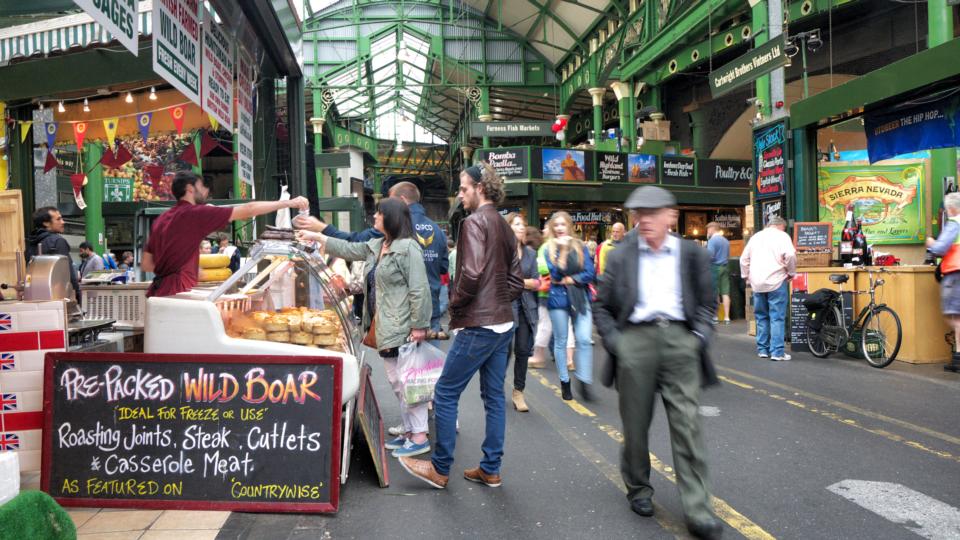
Walthamstow Market is shaped by global-local mobility. Tourist mobility increases demand and introduces diversity, but also creates unpredictable customer flows.
Trader mobility is also significant, as many vendors operate within multicultural environments, offering diverse cuisines and products similar to other London markets .
Mobility creates both opportunity and instability, requiring vendors to continuously adapt their operations and service delivery.
SOLUTIONS:
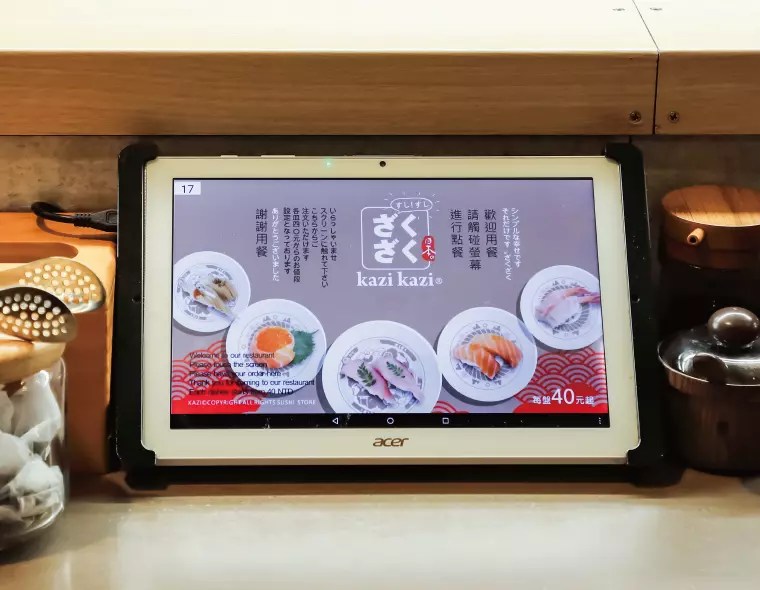
To address these challenges, vendors can adopt digital technologies such as mobile ordering and contactless payments to improve efficiency (Busulwa et al., 2022).
Technology reduces service delays and improves customer experience.
Brand development through social media and storytelling helps vendors differentiate themselves.
Stronger branding increases customer loyalty and repeat visits.
Collaboration with local councils and participation in community events can further enhance market performance.
CONCLUSION:
Walthamstow Market demonstrates the complexity of managing hospitality businesses in urban environments. While vendors face significant operational and economic challenges, they also benefit from cultural diversity and strong demand.
Success depends on the ability to adapt through innovation, strategic management, and understanding of mobility and service dynamics.
REFERENCE:
Busulwa, R., Pickering, C. and Mao, I. (2022) ‘Digital transformation in hospitality: The role of technology in improving customer experience’, International Journal of Hospitality Management, 102, pp. 103–115.
Gardini, M.A., Ottenbacher, M.C. and Schuckert, M. (2021) The Routledge Companion to International Hospitality Management. London: Routledge.
Hassanien, A. and Dale, C. (2020) Hospitality Business Development. Oxford: Goodfellow Publishers.
Higgins-Desbiolles, F. and Bigby, B. (2022) ‘Socialising tourism for social and ecological justice after COVID-19’, Annals of Tourism Research, 95, 103397.
King, C., Ford, R.C. and Chen, Y. (2021) ‘Organizational and human resource management strategies for hospitality’, Journal of Business Research, 123, pp. 1–10.
Lugosi, P. and Ndiuini, A. (2022) ‘Migrant entrepreneurship and hospitality work’, Annals of Tourism Research, 92, 103–120.
Walker, J.R. (2023) Introduction to Hospitality Management. 8th edn. Harlow: Pearson.
Weaver, D., Morrison, A. and Lawton, L. (2023) Tourism Management. 6th edn. Milton: Wiley.
Webster, C. and Ivanov, S. (2025) ‘The future of hospitality competitiveness’, Tourism Economics, 31(2), pp. 245–260.
UKHospitality (2024) UK Hospitality Industry Report. London: UKHospitality.